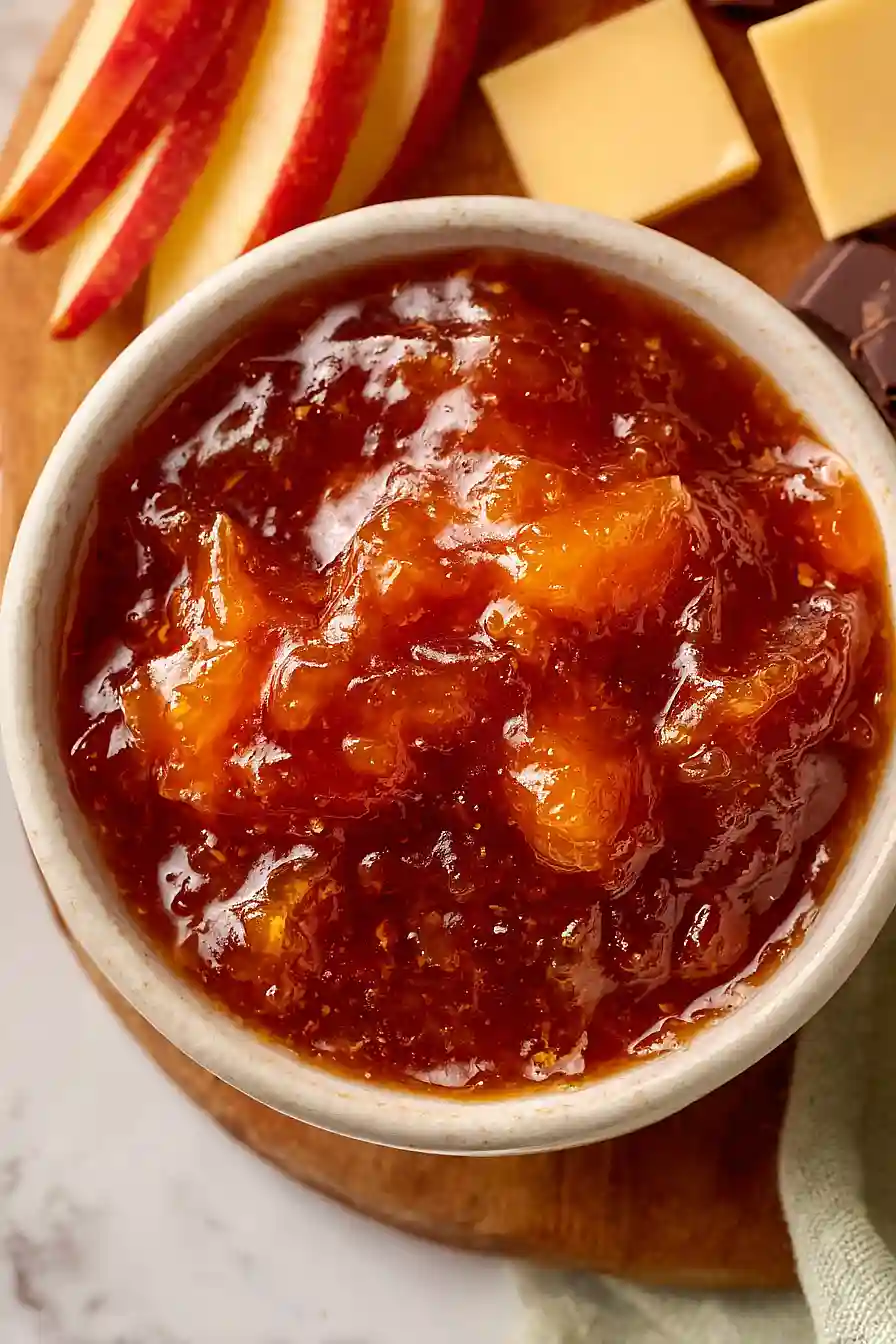
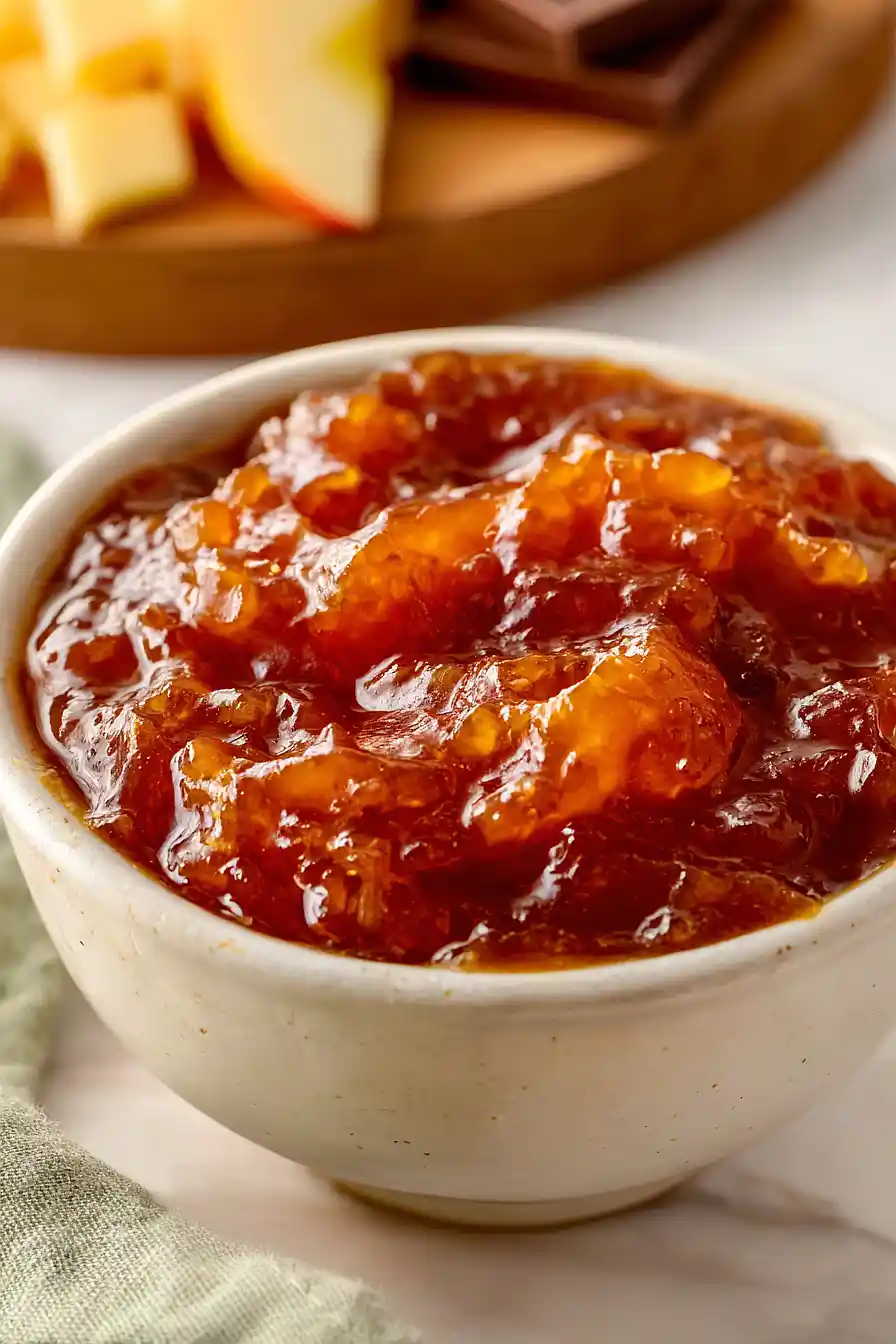
I’ve been making this apricot chutney for years, and it’s become my go-to condiment for everything from cheese boards to grilled chicken. The combination of fresh apricots and warm spices like nutmeg and cayenne creates the perfect balance of sweet, tangy, and just a little bit spicy. Trust me, once you taste homemade chutney, you’ll never go back to store-bought!
| Preparation Time | 10-15 minutes |
| Cooking Time | 70-80 minutes |
| Total Time | 80-95 minutes |
| Level of Difficulty | Easy |
| Servings | 8 cups of chutney |
Estimated Nutrition
Estimated nutrition for the whole recipe (without optional ingredients):
- Calories: 3100-3300
- Protein: 15-20 g
- Fat: 1-3 g
- Carbohydrates: 800-850 g
Ingredients
- 3.3 lb apricots (pitted and chopped into 1/2-inch pieces)
- 1.1 lb onions (finely diced into 1/4-inch pieces)
- 18 oz Heinz Apple Cider Vinegar
- 1.5 lb Domino granulated sugar
- 1.5 tsp salt
- 1.25 tsp freshly grated nutmeg
- 1.25 tsp mixed spice
- 1 tsp cloves
- 1.25 tsp cayenne
- 1.25 tsp McCormick curry powder
- 1 tbsp fresh ginger, finely grated
- 1 tsp yellow mustard seeds
Step 1: Prepare Ingredients and Build the Spice Base
- 3.3 lb apricots
- 1.1 lb onions
- 1.25 tsp freshly grated nutmeg
- 1.25 tsp mixed spice
- 1 tsp cloves
- 1.25 tsp cayenne
- 1.25 tsp McCormick curry powder
- 1 tbsp fresh ginger
- 1 tsp yellow mustard seeds
Start by pitting and chopping the apricots into 1/2-inch pieces, then finely dice the onions into 1/4-inch pieces.
While prepping, measure out all your dry spices (nutmeg, mixed spice, cloves, cayenne, curry powder, and mustard seeds) into a small bowl and grate the fresh ginger.
Having everything prepped and measured ensures you won't miss any flavors once the cooking begins—this is especially important with a long simmer where adding spices late won't develop their full complexity.
Step 2: Combine Ingredients and Bring to a Boil
- Prepared apricots from Step 1
- Prepared onions from Step 1
- 18 oz Heinz Apple Cider Vinegar
- 1.5 lb Domino granulated sugar
- 1.5 tsp salt
- Spice blend from Step 1
Add the prepared apricots, diced onions, apple cider vinegar, sugar, and salt to a large heavy-bottomed pot.
Stir well to combine, then add all the spices and ginger from Step 1.
Bring the mixture to a vigorous boil over medium-high heat, stirring occasionally to help dissolve the sugar and ensure even heating.
The initial boil is crucial for breaking down the fruit and beginning the flavor development.
Step 3: Simmer and Reduce Until Chutney Reaches Desired Consistency
- Boiling mixture from Step 2
Once boiling, reduce the heat to medium or medium-low to maintain a gentle, rolling simmer.
Simmer uncovered for about 1 hour, stirring occasionally (every 10-15 minutes) to prevent sticking and ensure even reduction.
The chutney will gradually thicken as the fruit breaks down and excess liquid evaporates.
I like to stir more frequently toward the end of cooking—if the mixture seems to be catching on the bottom, it means it's getting close to the right consistency.
Step 4: Test for Doneness and Final Cook if Needed
- Simmered chutney from Step 3
After 1 hour, test the chutney's consistency by placing a small spoonful on a chilled plate—it should wrinkle slightly when you push it with your finger when cool, similar to jam.
If the mixture still looks too loose or watery, continue cooking for an additional 5-10 minutes, stirring frequently.
The goal is a thick, chunky consistency that coats the back of a spoon.
Once ready, remove from heat immediately to prevent over-reduction.
Step 5: Jar and Seal the Chutney
While the chutney was cooking, sterilize your jars and lids by boiling them in water for at least 10 minutes, then keep them warm.
Pour the hot chutney into the hot jars, leaving about 1/4-inch headspace, then wipe the rims clean with a damp cloth.
Seal the jars immediately with the lids and bands, tightening just until finger-tight (not overly tight).
The hot chutney in hot jars creates a vacuum seal as it cools—this is essential for safe preservation.
Easy Apricot Chutney
Ingredients
Method
- Start by pitting and chopping the apricots into 1/2-inch pieces, then finely dice the onions into 1/4-inch pieces. While prepping, measure out all your dry spices (nutmeg, mixed spice, cloves, cayenne, curry powder, and mustard seeds) into a small bowl and grate the fresh ginger. Having everything prepped and measured ensures you won't miss any flavors once the cooking begins—this is especially important with a long simmer where adding spices late won't develop their full complexity.
- Add the prepared apricots, diced onions, apple cider vinegar, sugar, and salt to a large heavy-bottomed pot. Stir well to combine, then add all the spices and ginger from Step 1. Bring the mixture to a vigorous boil over medium-high heat, stirring occasionally to help dissolve the sugar and ensure even heating. The initial boil is crucial for breaking down the fruit and beginning the flavor development.
- Once boiling, reduce the heat to medium or medium-low to maintain a gentle, rolling simmer. Simmer uncovered for about 1 hour, stirring occasionally (every 10-15 minutes) to prevent sticking and ensure even reduction. The chutney will gradually thicken as the fruit breaks down and excess liquid evaporates. I like to stir more frequently toward the end of cooking—if the mixture seems to be catching on the bottom, it means it's getting close to the right consistency.
- After 1 hour, test the chutney's consistency by placing a small spoonful on a chilled plate—it should wrinkle slightly when you push it with your finger when cool, similar to jam. If the mixture still looks too loose or watery, continue cooking for an additional 5-10 minutes, stirring frequently. The goal is a thick, chunky consistency that coats the back of a spoon. Once ready, remove from heat immediately to prevent over-reduction.
- While the chutney was cooking, sterilize your jars and lids by boiling them in water for at least 10 minutes, then keep them warm. Pour the hot chutney into the hot jars, leaving about 1/4-inch headspace, then wipe the rims clean with a damp cloth. Seal the jars immediately with the lids and bands, tightening just until finger-tight (not overly tight). The hot chutney in hot jars creates a vacuum seal as it cools—this is essential for safe preservation.