Heat a small dry skillet over medium heat and add the pine nuts, stirring frequently for 2-3 minutes until fragrant and lightly golden—this brings out their rich, nutty flavor that's essential to a good pesto. While the nuts cool slightly, roughly chop the garlic cloves and measure out your basil (pack it tightly in the cup to maximize flavor). Have your olive oil, parmesan, lemon juice, and red pepper flakes ready to go.
Combine the toasted pine nuts, garlic, basil, parmesan, red pepper flakes, and lemon juice in a blender. Blend on medium speed until the mixture is roughly textured but cohesive—I prefer a rustic pesto with a bit of texture rather than completely smooth. Pour in the olive oil while blending just until combined; be careful not to over-blend or the heat can turn the basil bitter. Taste and adjust seasonings if needed.
Pat the chicken breasts dry with paper towels—this helps the marinade adhere better. Place the chicken in a zip-top bag or shallow dish and pour the pesto marinade over it, making sure each piece is well-coated. Seal the bag (if using) and refrigerate for at least 1 hour, or preferably overnight for deeper flavor penetration. I like to massage the marinade into the chicken a couple times if marinating overnight to ensure even coverage.
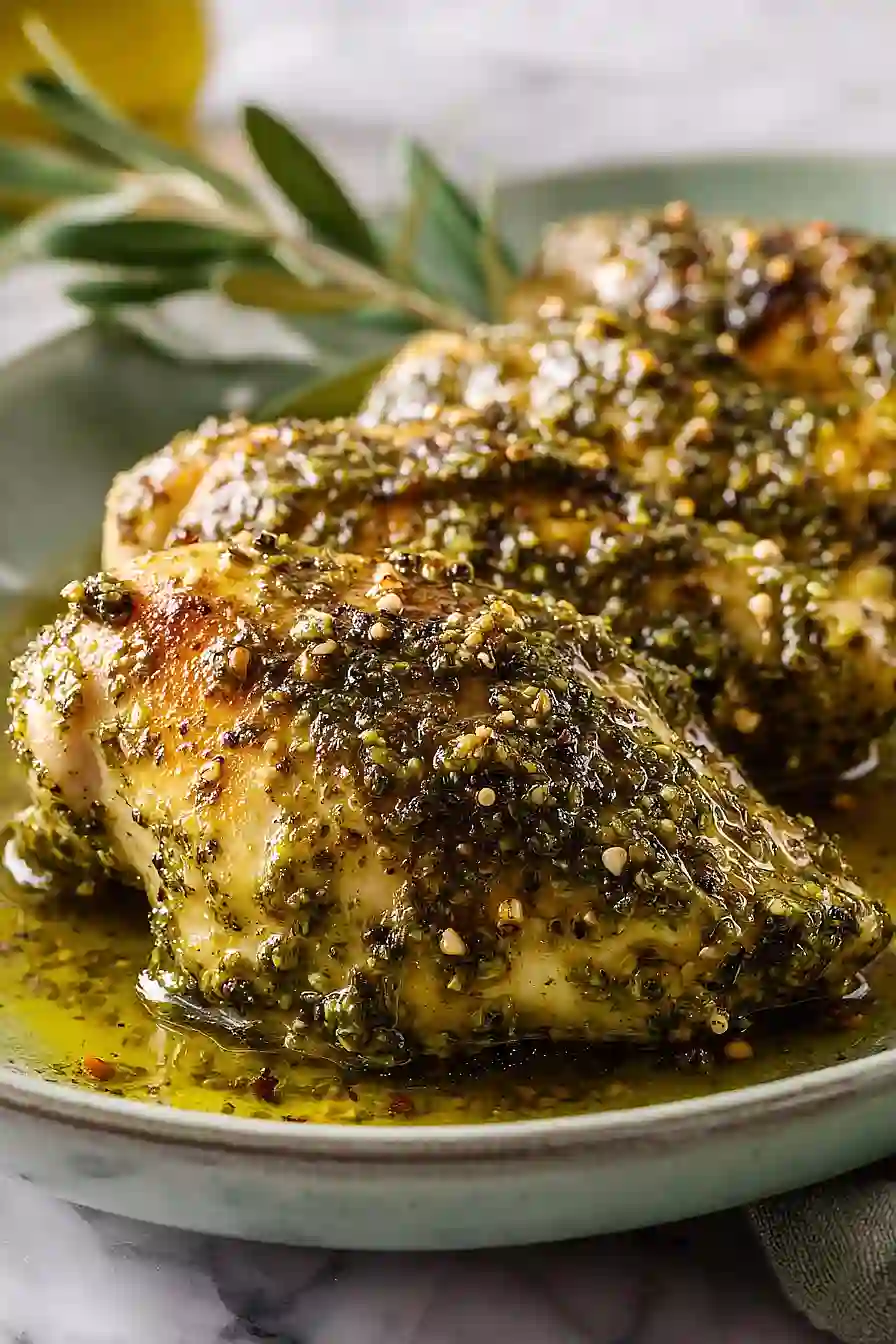
Remove the chicken from the refrigerator and let it sit at room temperature for 10 minutes before cooking. Remove each breast from the marinade (reserving the excess marinade in the bag), then sear in a hot skillet with a bit of olive oil over medium-high heat for 6-7 minutes per side, until golden and cooked through to an internal temperature of 165°F. The pesto coating will create a delicious crust while keeping the meat tender inside.